The short answer
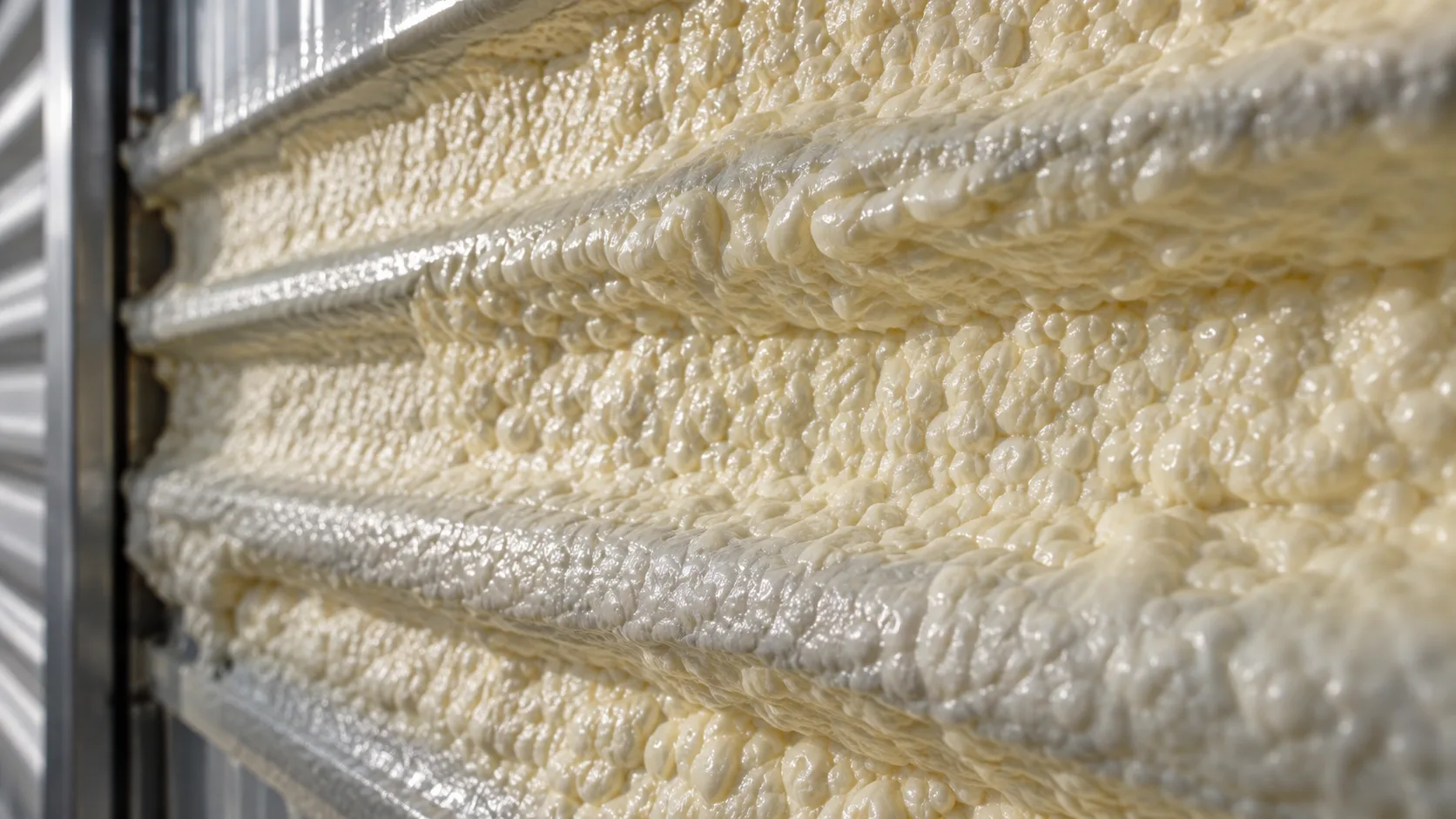
Spray foam goes in after the building is closed in and the rough-ins are inspected, and before drywall or interior paneling. Get that order right and the job is fast and clean. Get it wrong and you're cutting foam out to run wire or tearing out drywall to fix sweating steel.
Where does spray foam fit in the build?
| Stage | What happens | Spray foam? |
|---|---|---|
| 1. Slab and erection | Frame, purlins, girts, panels go up | Not yet |
| 2. Dried in | Roof and walls on, doors and windows installed, building weather-tight | Not yet. Fix any roof leaks now |
| 3. Rough-in | Electrical, plumbing, HVAC lines, boxes and ducts placed | Not yet |
| 4. Rough-in inspection | Inspector signs off (where required) | Book your foam date now |
| 5. Spray foam | Walls and roof sprayed, framing covered | Yes |
| 6. Thermal barrier and finish | Drywall, liner panel or approved coating in occupied areas | Done |
For a straight shop or barn with no interior finish, it's simpler: once the building is dried in and any wiring on the walls is run, you're ready.
Shell first, interior walls later
On metal buildings and barndos, it usually works best to spray the steel shell before interior stud walls go up. The crew gets clear access to every panel, purlin and girt, and coverage is better. Interior partition walls, like the wall between a barndo's living side and shop, can be framed afterward and insulated on their own.
If your interior framing is already up, it can still be done. It just takes more time and care to reach the steel behind the studs.
What sets the time on site?
- Spraying: the time on site depends on thickness, wall height and how much masking is needed. We schedule enough time to prep and spray in proper passes so it’s done right.
- Staying out: plan on at least 24 hours out of the building after spraying, or longer if the foam manufacturer says so. Keep kids and pets away too.
- Next trades: once re-entry time has passed, your drywall or liner crew can start.
Prep checklist before the crew arrives
- Roof is leak-free. Foam can hide leaks. Check screws, ridge caps and flashing, and fix anything now.
- Rough-ins are done and inspected where required. Mark any boxes or lines that need to stay clear.
- Panels are dry and clean. Foam needs to bond to the steel. Let us know about any oily or dusty panels.
- Clear the floor. Move tools, vehicles, equipment and materials out, or to the center of the building where they can be covered.
- Windows and doors are installed. We mask what needs protecting.
- Power and access. Tell us about gate codes, where the rig can park, and whether there's power on site.
- Plan the 24 hours. Nobody back inside until re-entry time has passed.
Do you need a thermal or ignition barrier over spray foam?
This is the part people forget to budget for. In occupied space, spray foam generally must be covered by an approved thermal barrier, most often half-inch drywall, or a coating listed for use with that specific foam. A common intumescent coating is only valid with the foam products listed in its evaluation report, so you can't just paint any foam with any coating.
- Barndo living side: plan for drywall over the foam.
- Shops and commercial buildings: the exception that allows exposed foam on one-story commercial buildings requires sprinklers throughout, which most shops don't have. Many shops use a liner panel, drywall, or a listed coating.
- Unincorporated areas: many builds out in the county have limited code inspections, but the rules still exist, and insurers, lenders and buyers may ask. It's on the owner and contractor to do it right.
We'll tell you what applies to your building when we quote it.
A sample two-week lead-up
Here's how the last stretch before foam usually goes on a new barndo or shop:
| When | What to do |
|---|---|
| About 2 weeks out | Send your length × width × height, ZIP and target date. Get your quote and pick a date. |
| About 10 days out | Walk the roof for leaks. Check doors and windows are installed. Confirm your drywall or liner crew's start date. |
| Rough-in week | Electrical, plumbing and HVAC rough-in finish. Schedule the inspection if your area requires one. |
| Day before | Clear the floor, mark anything that must stay uncovered, confirm gate code and where the rig parks. |
| Spray days | Depends on size, thickness and prep. Scheduled to be done right, not rushed. Stay out until re-entry time has passed. |
| Next day or two | Thermal barrier or finish trades start once re-entry time has passed. |
What if my building is already finished inside?
If you've already put up interior walls or a liner, foam can still go in, but it gets harder. Sometimes it's done from the inside through openings, sometimes the liner has to come down, and sometimes a different approach makes more sense. This is one of the most common reasons we hear from owners who wish they'd called earlier: they insulated with bubble wrap or fiberglass during erection, finished the inside, and then found the steel sweating. If you're still building, now is the cheapest time to get it right.
Why weather matters on spray day
Spray foam is sensitive to the temperature and moisture of the surface it's going on. Panels that are wet from condensation or rain, or very cold on a winter morning, can affect how well the foam bonds and rises. In our climate that mostly means waiting for morning dew to burn off the steel, or adjusting the schedule after a storm. A good crew checks the substrate before spraying, not after.
Common timing mistakes
- Spraying before the electrician. Wiring through closed-cell foam is a pain. Rough-in first.
- Waiting until the drywall crew is booked. Then the foam becomes the bottleneck. Call two weeks ahead.
- Skipping the leak check. Leaks under foam are harder to find and can speed up panel corrosion. See spray foam, rust and warranties.
- Insulating with bubble wrap now and "foam later." Spraying over existing facing or reflective products complicates the job. If you want foam, plan for it from the start.
Shops and barns without interior finish
Plenty of the buildings we foam will never get drywall: equipment barns, parking shops, hay barns. For those, the sequence is shorter:
- Building dried in, doors and windows on, leaks fixed
- Any wall-mounted wiring, lights and outlets run (or planned with clear paths)
- Spray foam on walls, roof and framing
- Re-entry time passes, then you move back in
Whether exposed foam is acceptable depends on how the building is used and the rules where you are. Occupied spaces generally need a thermal barrier or a coating listed for that specific foam; we'll tell you what applies when we quote. For a deeper look at thickness choices on these buildings, read how thick spray foam should be on a metal building.
Building in our area?
A lot of the new metal buildings and barndos we see are going up on acreage around Cleveland, Dayton and Montgomery, and out toward Beaumont. We work around your build schedule, open 9 AM to 9 PM, seven days a week.
Bottom line
Dried in, rough-in done, then foam, then drywall. Book two weeks early, fix leaks first, and budget for a thermal barrier in occupied space. For pricing, see barndominium spray foam cost or our barndominium spray foam page.