The two worries we hear most
Almost every metal building owner who's about to spray foam asks some version of these two questions:
- "If I glue foam to my steel, is it going to rust underneath where I can't see it?"
- "Will this void my building warranty?"
Both are fair. Here are honest answers, including the parts that aren't sales-friendly.
What actually causes rust in a foamed metal building?
Steel rusts when it stays wet. In a metal building, water reaches the steel in two main ways:
- Condensation: humid inside air hits cold steel and turns to water. This is the "my building rains inside" problem.
- Leaks: rain gets in through screws, flashing, ridge caps or damaged panels.
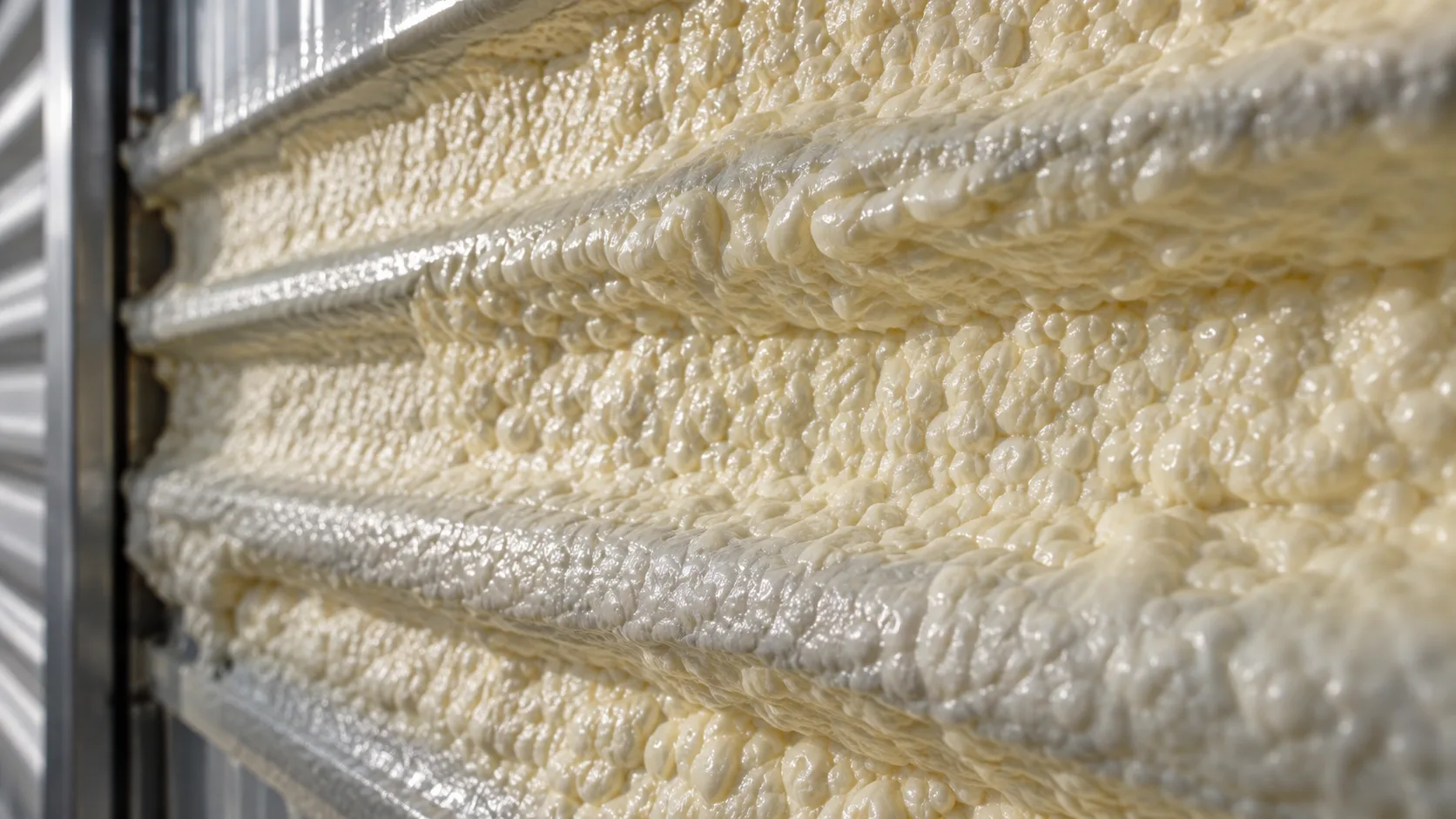
Closed-cell spray foam helps with the first one. When it's sprayed directly onto clean, dry steel, it bonds to the panel and keeps humid inside air from touching it. At about 1 to 2 inches, depending on the product, closed-cell foam becomes a vapor retarder, and it doesn't soak up water. That's why metal panel manufacturers describe closed-cell as the most common spray foam on metal panels.
Spray foam does not fix leaks. And this is where the real risk lives.
The real risks (and how to avoid them)
1. Hidden roof leaks
Once foam covers the underside of the roof, a leak can travel along the panel before it shows up inside. Metal panel makers specifically warn that undetected leaks can speed up panel corrosion under insulation. So:
- Fix leaks before spraying. Walk the roof, check screws, ridge caps and flashing, and run a hose test if you're unsure.
- Look up after big storms. Stains, drips at purlins, or a soft or discolored patch of foam are signs to check the roof above.
2. Gaps between the foam and the steel
If foam doesn't bond, for example on oily, dusty or wet panels, there can be air pockets behind it where condensation collects. Panel makers note that release agents and air gaps can let condensation build up. That's why prep matters: dry panels, the right substrate temperature, and properly heated, on-ratio foam.
3. Bare steel left uncovered
Purlins, girts and screw tips that aren't covered can still sweat and drip, even if the panels are foamed. Full coverage is part of doing the job right.
4. Very moist buildings
Livestock barns, wash bays, and shops with unvented propane heaters put a lot of water vapor in the air. Foam lowers the risk at the steel, but those buildings still need ventilation or dehumidification.
Will spray foam void my metal building warranty?
We can't tell you what your specific warranty says, and nobody else honestly can either without reading it. Some metal building and panel manufacturers have language about materials applied directly to the panels, and one major panel maker's own guidance is to consult the panel system manufacturer before applying spray foam, partly because of thermal movement and warranty terms.
Here's what to do:
- Find your building or panel warranty paperwork.
- Email your supplier and ask: "Does closed-cell spray foam applied to the interior face of the wall and roof panels affect the panel finish warranty or the building warranty?"
- Keep their written answer with your building records.
Most of the buildings we foam are new construction, and this is a five-minute email that saves headaches later.
One more panel note: very thin panels (29-gauge or thinner) can show some "oil canning," a wavy look, from the foam's forces and heat. It's cosmetic, but worth knowing on light-gauge buildings.
A simple routine after your building is foamed
Once your building is foamed, a few minutes a few times a year keeps small problems small:
- After every big storm, walk the inside and look up. Check the foam under ridge caps, at roof penetrations and along the eaves for stains or soft spots.
- Twice a year, look at the roof from outside or with binoculars. Backed-out screws, damaged washers and loose flashing are the usual leak sources on metal roofs.
- Watch the floor. A drip that only appears after rain is a leak. A drip on a dry, clear morning is condensation, usually from bare steel somewhere.
- Check any exposed steel such as door framing, eave struts and purlin ends for rust spots.
- Keep moisture sources vented. Propane heaters, wash-down areas and livestock all add water vapor to the air.
Retrofitting an existing building
Not every building we foam is brand new. If you already have a building with fiberglass rolls or a reflective product that's sweating, closed-cell foam is a common fix, but the approach changes:
- Old insulation usually comes out first, so the foam can bond directly to the steel. Spraying over facing leaves a layer between the foam and the panel where moisture can still collect.
- Existing rust gets checked. Surface rust on panels and purlins should be dealt with before it's covered up.
- Roof leaks get fixed. An older roof almost always has a few screws that need attention.
- Contents get moved or covered. A building full of equipment takes more prep time than an empty new one.
Send us a few photos of the inside along with your dimensions and we'll tell you what we see.
Can you replace a panel after it's foamed?
Southeast Texas gets storms. If a panel gets damaged after it's been foamed, it can still be replaced, but the foam bonded to the back has to be cut free from the inside first, then the panel swapped and the foam patched. It's an extra step, not a deal-breaker. If you're in a storm-heavy area like Port Arthur or Beaumont, keep a few spare panels from your build.
What good prep looks like
Most of the problems people worry about come down to what happens before the first pass of foam goes on:
- Dry steel. Morning dew or condensation on the panels has to be gone. Foam sprayed on wet steel doesn't bond well.
- Clean steel. Heavy dust, oil or release agents on new panels can affect adhesion. A good crew checks before spraying.
- The right temperatures. Spray foam chemicals are heated and mixed at the gun. Wrong temperatures or an off-ratio mix can cause shrinking, cracking, pulling away from the steel, and lingering odor.
- Proper lifts. Closed-cell foam goes on in layers with cooling time between passes. Spraying too thick in one pass causes its own problems.
This is why equipment, chemicals and careful application matter. Spray foam isn't just spraying foam on a wall.
What spray foam is not
To be straight about it:
- It's not a structural upgrade for a metal building. Lab tests showing extra wall stiffness were run on framed walls with sheathing, not on metal building panels.
- It's not fireproof. Foam in occupied space generally needs a code-approved thermal barrier, such as half-inch drywall or a coating listed for that specific foam.
- It's not a roof repair. Leaks get fixed from the outside.
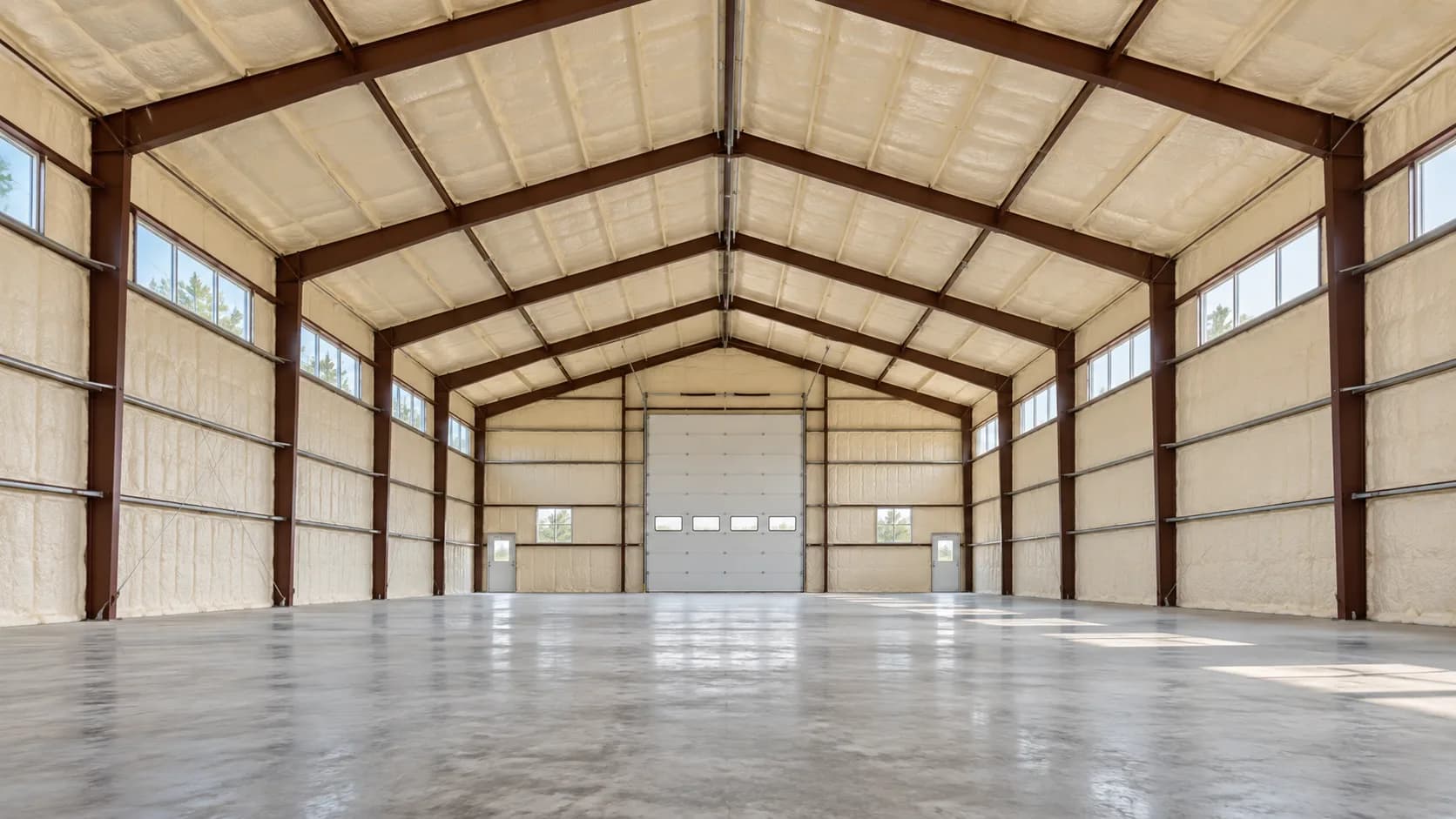
What closed-cell foam does well is insulate, air-seal, and slow humid air from reaching cold steel, which is exactly what most metal buildings in this climate need.
Bottom line
Spray foam doesn't cause rust; water does. Closed-cell foam on clean, dry, leak-free steel with full coverage is a well-established way to keep a metal building dry. Check your warranty in writing, fix leaks first, and choose a crew that covers every piece of steel. Learn how we approach it on our metal building spray foam page, or read why closed cell is the usual choice on steel.